

Every December, I find myself reflecting not just on the year I’ve lived, but the ways in which my thinking has changed and evolved. This year in review isn’t about the things I’ve accomplished or the places I went. It’s about the books that stayed with me long after I closed the last page because they changed the way I think. The ones I referenced in sessions, brought up in conversations, or that inspired me.
Not every book leaves a mark. These did.
This list isn’t meant to be overly academic or exhaustive. Instead, it’s an honest snapshot of the nonfiction books that challenged my assumptions, gave me language I didn’t know I was missing, and helped me show up more thoughtfully in my work and in my life.
Here are my top five nonfiction reads of the year (plus one bonus book I couldn’t leave out).
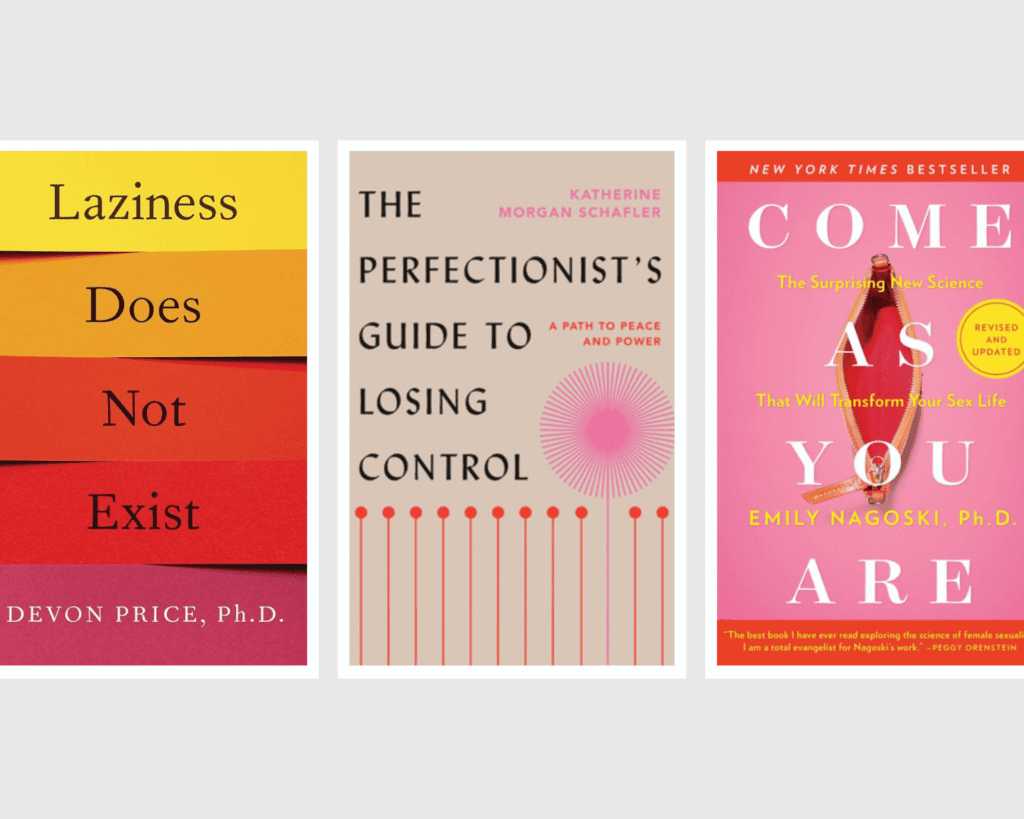
1. Laziness Does Not Exist by Devon Price, Ph.D.
This book absolutely stuck with me.
What started as a curiosity quickly turned into months of reflection and conversation. Laziness Does Not Exist digs deep into how pervasive the idea of “laziness” really is. Not just in how we judge others, but in how we judge ourselves. It challenged me to look at how productivity culture, capitalism, and societal expectations have shaped what we (or I) believe about worth, effort, and value. I’ve come to see all the ways in which this idea has persisted in my mind and my life even when I’ve intentionally cut out the label of “lazy.”
What I appreciated most is that this book isn’t really about laziness at all. It’s about how disconnected we’ve become from our own needs and values, and how often we shame ourselves for perfectly human responses to burnout, overwhelm, and unmet needs.
I talked about this book for months after reading it. Honestly, it feels like a must-read for everyone.
2. The Perfectionist’s Guide to Losing Control: A Path to Peace and Power by Katherine Morgan Schafler
This one felt uncomfortably familiar, in the way that a social media post can make you feel so called out and SEEN.
I saw myself in this book more than I expected to. What stood out was how it expanded the definition of perfectionism beyond the stereotypical “high-achiever” lens. It introduced different flavors of perfectionism that I hadn’t fully considered, especially the quieter, internal versions that don’t always look like success on the outside.
The language in this book was incredibly helpful. It put words to thought patterns I didn’t realize I was carrying. And the reframes didn’t feel dismissive or overly positive, they felt grounded and compassionate.
One idea that really stuck with me was the definition of perfectionism as constantly noticing the distance between how something is and how it could be. I didn’t realize how much I needed that language until I had it.
3. Come As You Are: The Surprising New Science That Will Transform Your Sex Life by Emily Nagoski, Ph.D.
More than anything, I loved the message behind this book.
Yes, it focuses on sex, desire, and intimacy, but even if those topics don’t feel relevant or interesting to you, the core message absolutely is: there is nothing wrong with you.
This book does an incredible job of normalizing differences in bodies, desires, experiences, and interests, and gently dismantling myths that are often treated as universal truths. I appreciated how inclusive and affirming it felt, without oversimplifying complex topics.
And I did learn things, which I always value. But what stayed with me most was how validating it felt. It’s the kind of book that quietly challenges shame and replaces it with understanding.
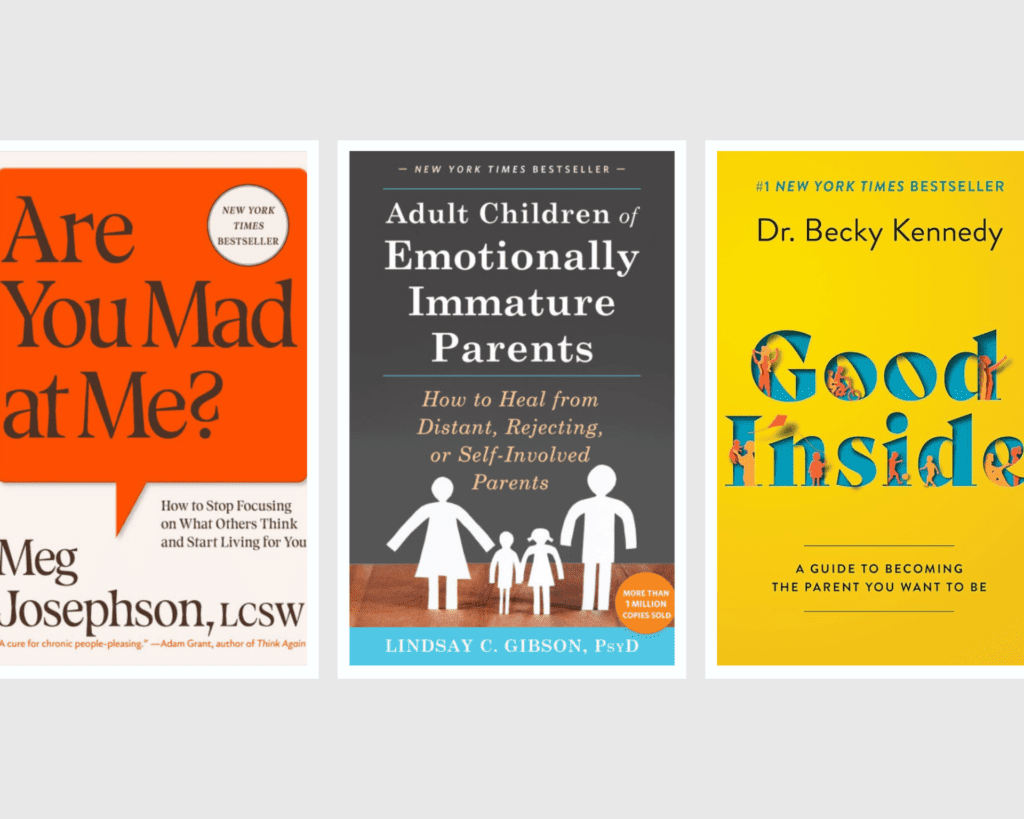
4. Are You Mad at Me? By Meg Josephson, LCSW
I felt deeply seen by this one and I think many of the people I work with (especially millennial women) would too.
This book explores people-pleasing, anxiety around relationships, and the fear of upsetting others. While I still think there’s some murkiness around identifying a fawn response (which isn’t a flaw of the book, it’s just genuinely hard to identify internal experiences like that alone), the examples and exercises were thoughtful and grounding.
Overall, this book felt validating and eye-opening. It highlighted patterns many of us carry into everyday interactions without realizing it, and offered things to notice and gently work with rather than “fix.”
This is a book I’d recommend not just reading, but carrying with you.
5. Adult Children of Emotionally Immature Parents by Lindsay C. Gibson, PsyD
This was a reread and it’s a yes every single time.
Unfortunately, this book applies to a lot of relationships. But what makes it so valuable is how practical and accessible it is. It offers clarity without cruelty, validation without blame, and language that helps you make sense of both yourself and others.
I often think of this book as one to return to when something feels unsettling in a relationship or when you’re feeling especially triggered. The tools and perspectives are easy to apply, and the insights tend to land exactly where they need to.
Genuinely, this is a book I believe most people could benefit from reading at least once.
Bonus Read: Good Inside by Dr. Becky Kennedy
I know this is technically a parenting book, which is why it’s a bonus (because parents aren’t necessarily the clients I work with specifically), but I couldn’t leave it out.
I could not stop thinking or talking about this book while I was reading it (and honestly, long after I finished it). To be honest, my husband probably got pretty annoyed with all the insights I HAD to share with him immediately upon getting out of my car every time I listened. It gave me deep insight into my own unmet childhood needs and clarified what I want to prioritize with my own child.
Some of the reflections on childhood hit harder than I expected. In a way that felt triggering, but also thoughtful and deeply meaningful. This book felt incredibly practical, emotionally intelligent, and grounded in psychological understanding.
Truly yes. All the yes.
Final Thoughts
If this year taught me anything, it’s that the books we read don’t just inform us, they shape us. They give us language, challenge our blind spots, and sometimes help us feel less alone in thoughts we didn’t know how to name.
This year in review feels less like a list and more like a snapshot of where I’ve been internally, where I’m still growing, and the tools I’ve picked up as a therapist to continue helping my clients as the world and humans change.
If you’re looking for nonfiction that actually stays with you, I hope one of these finds its way onto your list.
If one of these books caught your attention, I’ve linked them here for you.
Interested in working together? Schedule a consultation to discuss your goals and how support could help.
