
Dry Needling: Resetting Trigger Points to Alleviate Pain and Tension
At Redbird Wellness, dry needling is a precise technique used to decrease pain, sensitivity, and deep muscular tension associated with trigger points.
Dry needling focuses on addressing muscular dysfunction at its source. Rather than stretching or massaging around the problem, this technique targets the specific points within the muscle that are driving pain, tension, and altered movement patterns.
What Is Dry Needling?
Trigger points are those hyperactive, knot-like bands within a muscle.
These trigger points can develop due to injury, overuse, repetitive movement, prolonged postures, stress, or poor movement mechanics. Once established, they often persist even when the original injury has healed, continuing to generate pain, tightness, and reduced range of motion.
We use a thin filament needle to target these specific areas.
The needle itself does not inject any medication. Instead, it acts as a mechanical stimulus designed to communicate directly with the nervous system and the muscle tissue involved. Dry needling allows us to access deep muscular structures that are often difficult to reach through manual therapy alone.
The Technique: Why the Twitch Response Matters
Unlike other methods, our primary technique involves a gentle, rapid "pistoning" motion designed to elicit a brief, involuntary twitch response from the muscle. This twitch response is the key to the treatment's effectiveness.
The twitch response is a spinal cord–mediated reflex. When it occurs, it signals that the nervous system has recognized the dysfunctional muscle activity and is momentarily resetting it. Research has shown that this response is associated with decreased muscle tension, improved blood flow, and reduced pain sensitivity within the affected area.
While the sensation may feel unfamiliar, it is typically very quick and often followed by a sense of release or relief in the muscle.
Understanding Trigger Points: A Reset, Not a Stretch
Think of a trigger point like a frozen computer. You can't reason with it so you need to reboot it.
Trigger points don’t respond well to logic, stretching alone, or “pushing through” discomfort. They exist in a state of constant contraction, sending ongoing pain signals and limiting normal muscle behavior. This is why traditional approaches may provide only temporary relief.
The twitch response from dry needling acts as that reboot.
By interrupting the feedback loop between the muscle and the nervous system, dry needling helps restore the muscle’s ability to contract and relax normally.
It helps reset the trigger point, pulling the plug on the cycle of pain and tension.
How Dry Needling Reduces Pain and Restores Function
By addressing these trigger points directly, we can rapidly reduce discomfort, quiet down overactive nerves, and restore normal muscle function.
When trigger points are released, several important changes occur. Muscle tone normalizes, local circulation improves, and the nervous system reduces its threat response to movement. This often leads to improved flexibility, better coordination, and a noticeable decrease in pain.
Many patients report feeling looser, lighter, or more mobile shortly after treatment, even in areas that had felt stubborn or unresponsive before.
Why Dry Needling Is Often Used Early in Care
This creates a window of opportunity for the muscle to relax fully, allowing for improved movement and making your rehabilitative exercises significantly more effective.
Pain and tension can act as barriers to progress. When muscles are guarding or hypersensitive, it becomes difficult to strengthen, retrain movement, or restore proper mechanics. Dry needling helps lower these barriers, making it easier for your body to respond to corrective exercises and hands-on care.
This is why dry needling is often integrated early in a treatment plan or used strategically when progress has plateaued.
What Dry Needling Feels Like
Patients often describe dry needling sensations as brief pressure, a quick twitch, or a dull ache that resolves rapidly. The experience varies depending on the muscle treated and individual sensitivity, but discomfort is typically short-lived.
Post-treatment soreness can occur and is similar to what you might feel after a challenging workout. This usually resolves within 24–48 hours and is a normal part of the tissue’s response to change.
Conditions That May Benefit From Dry Needling
Dry needling is commonly used for neck pain, back pain, shoulder tension, hip discomfort, headaches, jaw tension, and muscle-related pain throughout the body. It is especially helpful when tightness or trigger points are limiting movement or contributing to persistent symptoms.
Because muscles play a key role in joint stability and movement control, improving muscle function often has a positive ripple effect throughout the body.
A Thoughtful, Integrated Approach at Redbird Wellness
At Redbird Wellness, dry needling is never used as a standalone solution. We evaluate how your muscles, joints, and nervous system interact, then integrate dry needling with movement-based rehabilitation and other supportive therapies.
Our goal is not just to release tension, but to help your body hold onto those changes so relief lasts and movement continues to improve long after your session.
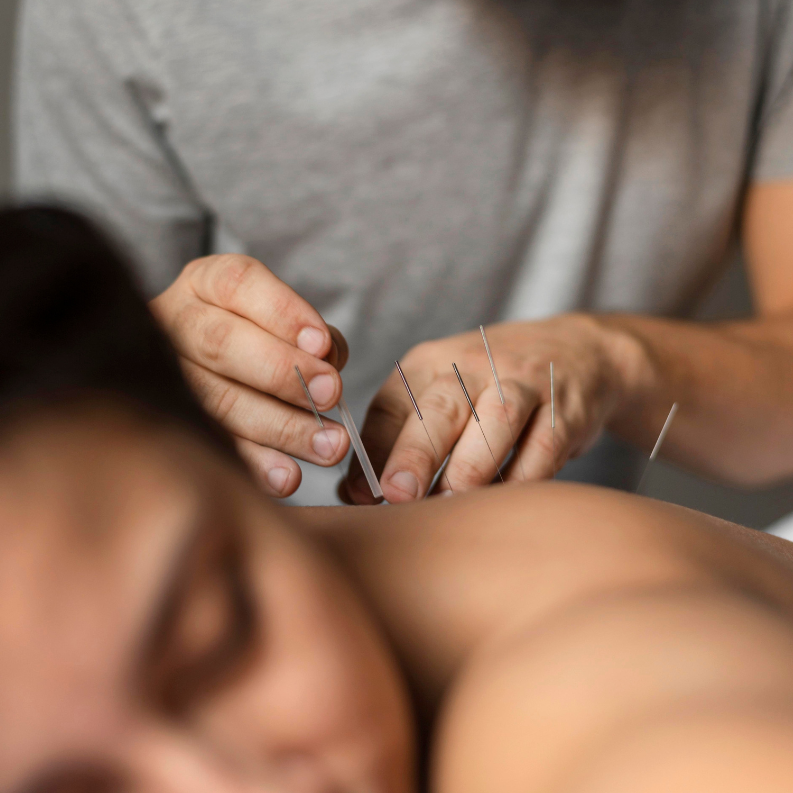


Ask our chiropractors if dry needling is right for your muscle pain.
Book an appointment to learn more.