
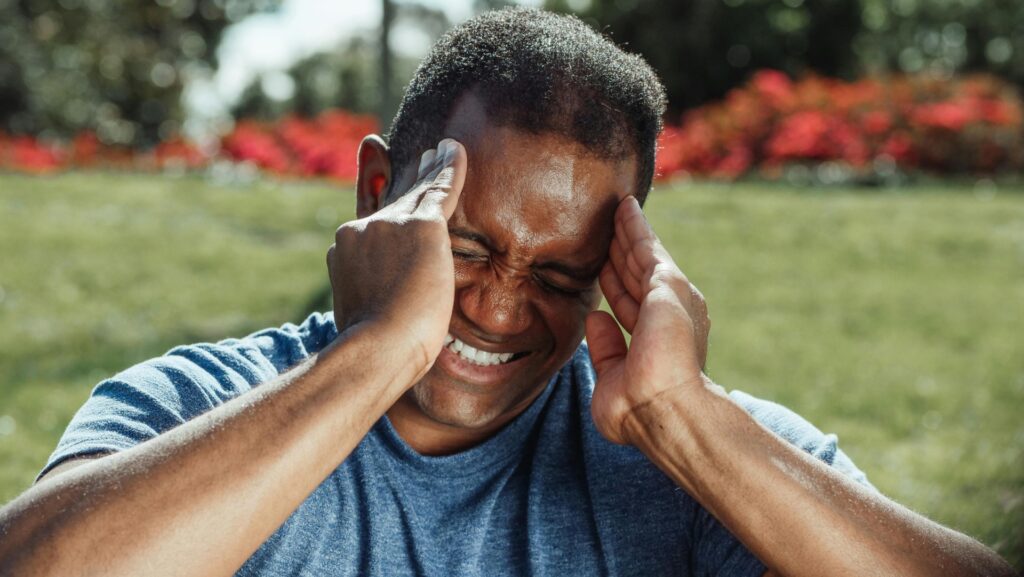
That headache that starts at the base of your skull and slowly radiates over your head to your forehead or eye region? It might not be a migraine. It might not be a tension headache. It might be coming from your neck.
Cervicogenic headaches are caused by dysfunction in the upper cervical spine. The joints, muscles, and connective tissue at the very top of your neck. The good news is they respond exceptionally well to active, exercise-based care. The bad news is most people never get that care. They reach for medication, rest, or assume they just have to live with it.
At Redbird Wellness, we take a different approach. Here’s how to identify, treat, and prevent cervicogenic headaches by addressing the real source which is your neck.
What Is a Cervicogenic Headache?
A cervicogenic headache is a secondary headache which means the pain is referred from another structure, not generated within the head itself. In this case, the source is the upper cervical spine (the C1-C3 vertebrae and their surrounding tissues).
Key Features
- One-sided pain (though it can be bilateral)
- Starts at the base of the skull and radiates forward to the forehead or eye
- Provoked by neck movement, sustained postures (desk work), or pressure on the upper neck
- Accompanied by neck stiffness and reduced range of motion
What It Is NOT
- A migraine (migraines often have nausea, light sensitivity, and throbbing pain)
- A tension-type headache (more band-like pressure, less neck-specific)
- A sign of something serious (but red flags do exist, see below)
Red Flags That Require Immediate Medical Attention:
- Sudden, severe “thunderclap” headache
- Headache accompanied by weakness, slurred speech, vision changes, or confusion
- Headache after a head injury
- New headache after age 50
If you have any of these, seek emergency care immediately. If not, your neck is likely the culprit.
One of the reasons cervicogenic headaches are commonly misdiagnosed is because neck-generated pain can mimic several other headache types. Patients often describe pain behind the eye, tension across the forehead, or symptoms that feel “migraine-like.” The overlap confuses people. But the distinguishing factor is usually mechanical provocation. If your symptoms consistently worsen with prolonged sitting, looking down, poor sleep positions, lifting, driving, or neck movement, the cervical spine deserves serious attention.
Why Your Neck Can’t Keep Up (The “High Demand” Problem)
Your neck is constantly under stress. Desk work, phone scrolling, driving, reading, and even sleeping positions all place demands on the cervical spine.
The issue isn’t just “bad posture.” The issue is your neck’s inability to tolerate the load you’re placing on it.
| Daily Activity | Load on Neck |
| Neutral head position (0° tilt) | 10-12 lbs |
| 15° forward head tilt | 27 lbs |
| 30° forward head tilt | 40 lbs |
| 45° forward head tilt | 60 lbs |
| 60° forward head tilt (looking at phone) | 60+ lbs |
Most people spend hours each day with their heads tilted forward. That’s not sustainable. Your neck joints, muscles, and connective tissue eventually reach their limit, and when they do, you get pain, stiffness, and headaches.
The solution isn’t just “sit up straight.” The solution is building your neck’s capacity to tolerate these demands.
Another overlooked issue is that the neck is expected to stabilize constantly while your eyes, jaw, shoulders, and arms move around it all day. Your cervical spine is not operating in isolation. If your shoulder blades are stiff, your rib cage doesn’t rotate well, or your jaw muscles stay chronically tense, your neck absorbs more stress than it was designed for. This is why many people feel temporary relief after massage or stretching, only to have the headache return once normal daily movement resumes. The system underneath the pain never changed.
Movement Snacks > Perfect Posture
Here’s the truth no one knows about. Static posture is overrated. No single sitting or standing position is perfect. The real problem isn’t your position, it’s the time you spend in any one position.
The fix is movement snacks.
Instead of trying to hold “perfect posture” for hours (impossible and unnatural), take 30-60 seconds every 30-45 minutes to move your neck through its full, pain-free range of motion.
Simple Movement Snacks for the Office
- Gentle chin nods: Tuck your chin toward your throat as if making a double chin. Hold 2 seconds. Repeat 5-10 times.
- Slow head rotations. Turn your head to look over one shoulder, then the other. Stay within pain-free range.
- Side bends. Gently tilt your ear toward your shoulder, left and right.
- Shoulder rolls: Roll your shoulders up, back, and down 10 times.
- Cervical C.A.R. Move your chin in as big of a circle as you can. Do not speed through this. Do 5 counterclockwise and 5 clockwise
These movement snacks do more for your neck than any ergonomic chair or posture corrector ever could. They remind your nervous system that movement is safe, and they prevent the cumulative stiffness that drives cervicogenic headaches.
Most people underestimate how quickly stiffness accumulates. You do not need eight hours of terrible posture to irritate your neck. Sometimes thirty uninterrupted minutes in one position is enough, especially if your neck already has limited mobility or low endurance. Small, frequent movement exposures throughout the day often outperform one long stretching session at night because they interrupt the buildup before it becomes irritation.
Sleep Position Matters More Than People Think
A surprising number of cervicogenic headaches begin overnight or are the worst first thing in the morning. That usually points toward sustained compression or poor positioning during sleep. Stomach sleeping is often the biggest offender because it forces the neck into prolonged rotation for hours. Side sleeping with multiple pillows or poor shoulder support can also create asymmetrical loading through the upper cervical spine.
You do not need a “perfect” pillow. You need a setup that allows your neck to stay relatively neutral and relaxed. If you wake up stiff every morning, your sleeping position may be contributing more than your desk setup. We frequently modify sleeping strategies alongside rehab because eight hours of repeated stress each night can easily overpower the progress made during treatment sessions.
The Cornerstone of Treatment: Exercise and Rehab
Medication can mask the pain. Rest can provide temporary relief. But the only way to stop cervicogenic headaches long-term is to build your neck’s capacity.
Key Exercise Categories
Deep Neck Flexor Endurance
These muscles are your neck’s “core.” They stabilize your cervical spine and hold your head upright. When they’re weak, other muscles (like your upper traps and suboccipitals) take over and become tight and painful.
What it looks like: Gentle chin tucks performed in lying, sitting, and standing positions. Progressing from short holds to longer endurance sets.
Upper Cervical Mobility
The joints at the very top of your neck (C1-C2, C2-C3) are the primary sources of cervicogenic headaches. Restoring their ability to move through a full, pain-free range is essential.
What it looks like: Gentle nodding, small rotations, and specific mobility drills that target the upper cervical spine without aggravating symptoms.
Scapular and Thoracic Control
Your neck doesn’t work in isolation. Poor shoulder blade control and a stiff mid-back force your neck to compensate, creating tension that refers to your head.
What it looks like: Scapular retractions, thoracic rotations, and postural correction drills that take load off your neck.
Load Tolerance Progression
Once baseline mobility and endurance are established, we gradually increase the load on your neck to prepare it for real-life demands: desk work, driving, reading, and even sport.
What it looks like: Adding resistance bands, increasing time under tension, and introducing dynamic movements (like gentle nodding against a band).
One mistake people make is assuming rehab should feel aggressive to work. With cervicogenic headaches, more intensity is not always better. The cervical spine responds best to gradual exposure, consistent repetition, and improved endurance. Aggressive stretching or forceful cracking often irritates already sensitive tissues. The goal is not to force the neck into motion. The goal is to restore confident, repeatable movement that the nervous system trusts.
Why Strength Alone Isn’t Enough
Many active people are surprised when they develop neck-related headaches because they already work out consistently. But general fitness does not automatically equal cervical capacity. Someone can deadlift heavy, train hard, and still have poor deep neck flexor endurance, limited thoracic rotation, and stiff upper cervical joints.
The neck requires specific endurance and positional control. It spends most of the day performing low-level stabilization, not maximal strength efforts. That means the rehab emphasis is often on coordination, endurance, and movement variability rather than brute force strengthening.
Manual Therapy: An Accelerant, Not the Solution
We have tools that can help speed up the process:
- Manipulation: Restores motion to stiff upper cervical joints
- Dry needling: Deactivates trigger points in suboccipitals, upper traps, and levator scapulae
- Scraping (IASTM): Releases fascial tension in the upper back and neck
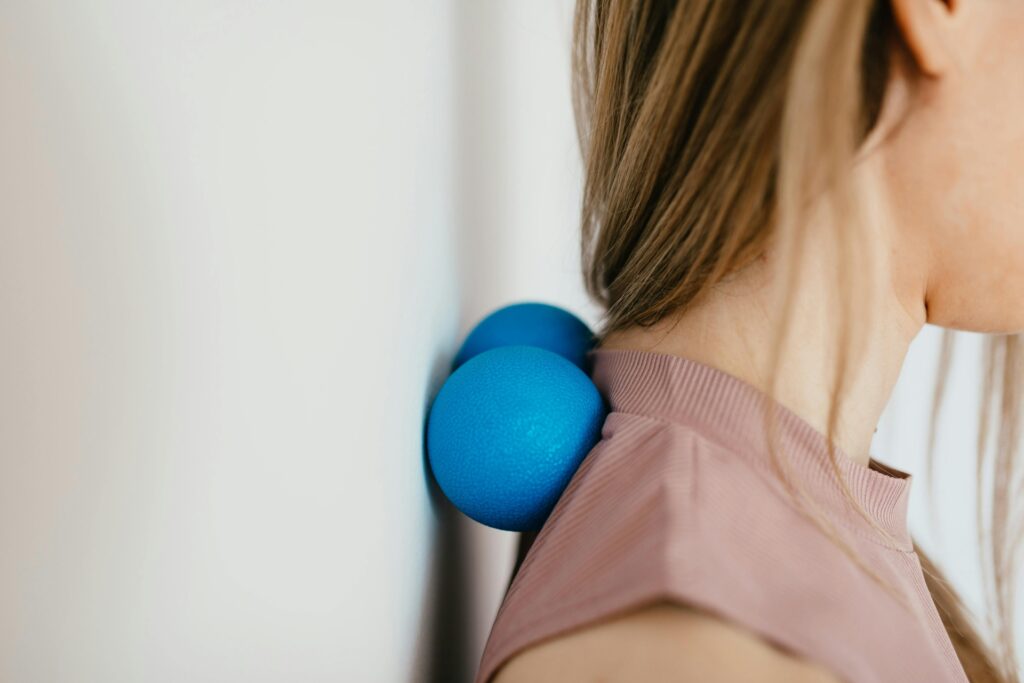
These are accelerants. They can reduce pain and improve mobility in the short term, creating a window where exercise and rehab are more tolerable and effective. But they are not a substitute for building your neck’s capacity through active care.
The research supports this: multimodal care (manual therapy + exercise) produces better long-term outcomes than either alone. But the exercise is what creates lasting change.
This distinction matters because many people accidentally become dependent on passive treatment. They feel good for a day or two after a massage, adjustments, or dry needling, but symptoms return because nothing has changed in the system’s ability to tolerate stress. Manual therapy should create an opportunity for better movement. It should not become the entire plan.
The Nervous System Component
Cervicogenic headaches are mechanical, but that does not mean the nervous system is uninvolved. Chronic irritation sensitizes the nervous system over time. Muscles become more protective, movement feels threatening, and even normal daily activity can start triggering symptoms. This is why some people feel like their headaches are becoming easier and easier to provoke.
The answer is not to avoid movement. It’s graded exposure to movement. We progressively teach the nervous system that neck motion is safe again. This is one reason exercise-based treatment works so well. You’re not just changing muscles and joints. You’re changing how the brain interprets those signals.
The Medication Myth
Many people assume that medication is the only option for chronic headaches. They reach for ibuprofen, acetaminophen, or prescription migraine drugs and when those stop working, they feel hopeless.
Medication has its place. For acute, severe headaches, it can provide necessary relief. But medication does not fix the underlying problem. Your neck is still stiff. Your deep neck flexors are still weak. Your movement patterns are still dysfunctional.
The pain will keep coming back until you address the source.
Cervicogenic headaches are mechanical problems. They require mechanical solutions: mobility, strength, endurance, and load tolerance. Pills can’t give you any of those.
What to Do Next
If you have headaches that start at the base of your skull and radiate forward, especially if they’re accompanied by neck stiffness and provoked by sustained postures, your neck is likely the source.
The solution isn’t more medication. It’s active, targeted rehab that builds your neck’s capacity to handle the demands of daily life.
Ready to stop chasing headaches with pills and start fixing the source? Schedule a visit at Redbird Wellness to discuss whether cervicogenic headaches are driving your pain.
