
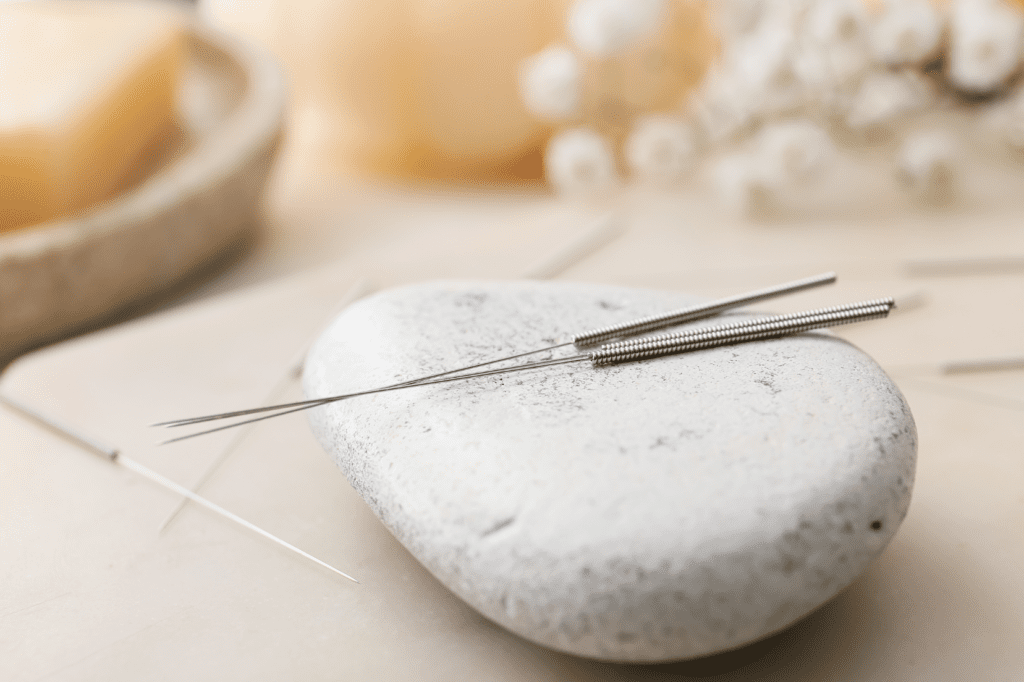
If you’ve been living with chronic headaches and jaw pain, you’ve likely tried a lot of things. Maybe you’ve done the stretches, tried the mouthguard, and taken the medications, only to find the tension keeps coming back. At Redbird Wellness in Hopkins, we use dry needling as our most effective tool for breaking this cycle. It’s not magic. It’s a targeted, mechanical reset of the specific muscles that refer pain into your head and jaw. Here’s how it works, why it’s so effective, and what makes our approach different.
Why Dry Needling for Headaches and TMJ?
Headaches and TMJ disorders are, at their core, often muscular problems. The muscles of your head, neck, and jaw can develop trigger points which are hyperactive, tender bands of muscle fiber that refer pain to other areas. These trigger points don’t relax on their own. They stay “on,” perpetuating pain, restricting movement, and driving the cycle of tension.
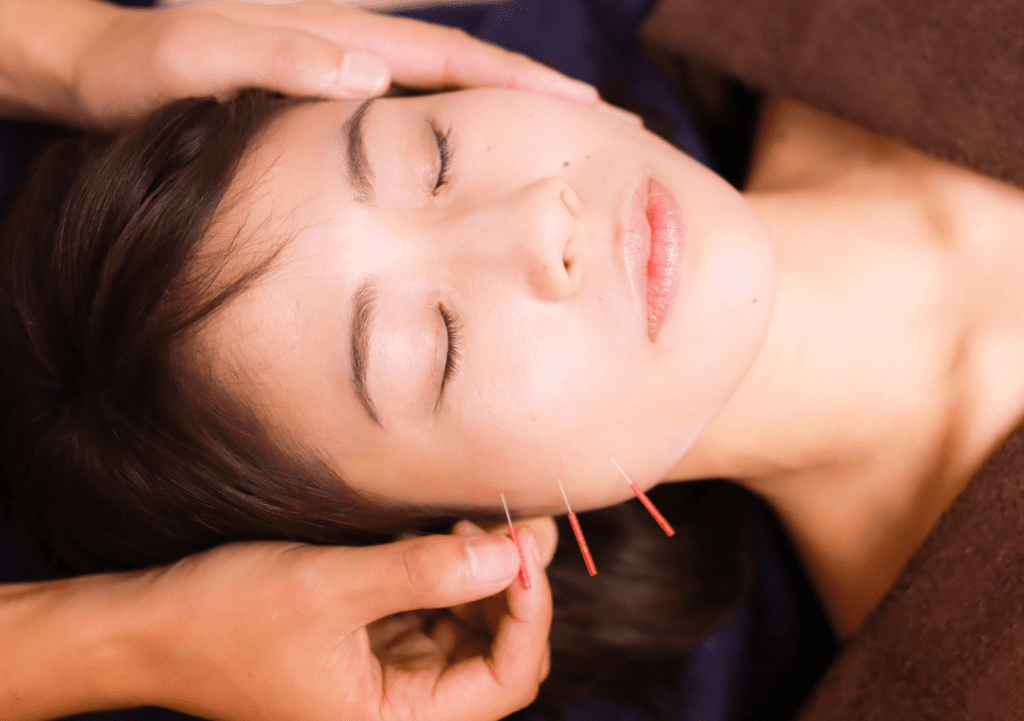
Dry needling targets these trigger points directly. By inserting a thin filament needle into the trigger point and using a specific technique, we can elicit a twitch response which is a brief, involuntary contraction of the muscle fibers. This twitch is the key. It acts like a reset, pulling the plug on the overactive motor unit and allowing the muscle to finally relax.
Trigger points are particularly influential in conditions involving headaches and TMJ because these muscles have strong referral patterns into the face and skull. A trigger point in the jaw or neck doesn’t always hurt where it lives. Instead, it often sends pain signals into the temples, behind the eyes, into the teeth, or across the forehead. This is why patients frequently believe they have sinus problems, dental issues, or migraines when the true source is muscular. Dry needling interrupts that referral pathway directly at its origin.
Another important factor is circulation. Trigger points often have reduced local blood flow, which limits oxygen delivery to the muscle tissue. This creates a metabolic environment where pain chemicals accumulate. The twitch response stimulated during dry needling helps restore circulation to the area, allowing the muscle to recover and reducing the biochemical drivers of headaches and TMJ pain.
Our Technique: Why Precision Matters
The muscles of the head, neck, and jaw are small, sensitive, and packed closely together. They require a careful, intentional approach. Our method differs from what you might see elsewhere:
The Piston Technique
We use a gentle, rapid pistoning motion within the trigger point, typically for about 30 repetitions, until we feel the tissue release. We then remove the needle and move to the next point. We rarely leave needles in to sit. Why? Because the muscles in this region are highly reactive. The piston technique allows us to precisely deactivate the trigger point without overstimulating the surrounding tissues, which could create unnecessary soreness.
This approach also allows us to gather immediate feedback from the tissue. Each twitch response gives us information about how reactive the muscle is and whether additional trigger points remain active. In many patients with headaches and TMJ dysfunction, multiple muscles participate in the pain pattern. The piston technique allows us to systematically address each contributor during a single session while minimizing overall irritation.
Safety First: The Pinch and Lift Method
Needling the head, neck, and jaw requires respect for the anatomy. There are important structures like arteries, nerves, and deep organs that must be avoided. We negate this risk by using a pinch and lift technique. Instead of inserting the needle perpendicular to the spine (straight in), we pinch and lift the muscle and trigger point away from underlying structures and insert the needle parallel to the spine. This keeps the needle within the muscle belly, precisely where it needs to be, and away from anything we don’t want to contact.
This method also improves accuracy. By isolating the muscle tissue between our fingers, we can clearly identify the taut band responsible for the trigger point. This ensures the needle is placed exactly where the dysfunction exists rather than relying on general anatomical landmarks. Precision is especially important when treating headaches and TMJ because these regions contain dense clusters of nerves and muscles working together.
The Target Map: Where We Needle
For headaches and TMJ, we focus on the muscles that clinical experience and evidence show are the primary drivers. Each is chosen for its specific referral patterns and role in the tension cascade.
For TMJ: The Jaw Muscles
- Masseter: This is the powerhouse of chewing and a primary source of jaw pain and tension. Trigger points here refer pain to the jaw, teeth, and even the temple. Needling the masseter often produces a strong, satisfying twitch that patients describe as a quick, deep cramp that immediately releases.
- The Experience: The jaw muscles are dense and can produce a significant twitch. This is not just normal, it’s the goal. Patients should expect a brief, intense sensation that fades quickly, leaving the muscle feeling looser and less reactive.
We may also assess deeper jaw stabilizers such as the medial and lateral pterygoid muscles. These muscles are responsible for controlling how the jaw tracks when you open and close your mouth. When they become dysfunctional, the jaw can deviate to one side, click, or lock. While not every patient requires treatment of these muscles, evaluating them is important in persistent TMJ cases where jaw mechanics are altered.
For Headaches: The Neck and Shoulder Muscles
- Suboccipitals: These four pairs of small muscles at the base of your skull are intimately connected to headache pain. They attach directly to the upper cervical spine and the occiput, and trigger points here refer to pain into the head in a classic tension-type pattern.
- SCM (Sternocleidomastoid): This large muscle running from behind your ear to your collarbone is a common hidden driver of both headaches and jaw tension. It can refer to pain in the forehead, behind the eye, and in the jaw.
- Upper Trapezius: The classic “knot” at the top of your shoulder. Trigger points here refer pain up the neck and into the temple.
- Levator Scapulae: Running from the top of your shoulder blade to the side of your neck, this muscle is often tight in people with forward head posture. It refers to pain at the angle of the neck and shoulder.
Another muscle frequently involved in headaches is the temporalis. This fan-shaped muscle on the side of the head works with the masseter to close the jaw. When overactive, it can create strong temple pressure that mimics migraine pain. Dry needling the temporalis can significantly reduce temple headaches and the feeling of tightness across the side of the head.
What a Treatment Feels Like
If you’ve never experienced dry needling, the anticipation is often worse than the reality. Here’s what to expect during a session for headaches and TMJ:
- Assessment: We identify the specific trigger points contributing to your pain pattern.
- Needling: You’ll feel a small, quick insertion that’s often described as a tiny pinch. Once the needle is in the trigger point, we use the piston technique.
- You may feel:
- A deep, dull ache
- A brief, intense cramp (the twitch response)
- A sensation of the muscle releasing or “letting go”
- You may feel:
- The Aftermath: The twitch response is the goal. It means the trigger point has been successfully reset. The sensation fades quickly, and the muscle often feels immediately looser and less reactive.
After treatment, some patients experience mild soreness similar to what you might feel after a workout. This typically resolves within 24 to 48 hours. The soreness is simply the muscle recalibrating after the trigger point has been deactivated. Hydration, gentle movement, and light stretching usually help this phase pass quickly.
The Integration: What Comes Next
Dry needling is rarely a standalone treatment in our clinic. It creates a window of opportunity that we immediately capitalize on.
For TMJ
After needling the masseter and related jaw muscles, we typically don’t need to do much else in that session. The muscle has been reset, and the patient often experiences immediate relief in jaw tension and pain. We may provide simple at-home movement suggestions to reinforce the release.
These suggestions may include controlled jaw opening drills, tongue positioning exercises, and relaxation strategies that reduce daytime clenching. Because TMJ symptoms are often influenced by habitual tension, these small changes can significantly improve long-term outcomes when paired with dry needling.
For Headaches
After needling the suboccipitals, SCM, and upper traps, we have a brief window where the nervous system is calm and the muscles are receptive. We often follow immediately with:
- Soft Tissue Work: MRT or cupping to further address connective tissue restrictions.
- Manipulation: Restoring motion to stiff upper cervical joints that have been held in place by guarding muscles.
- Rehab: Simple, targeted movements to reinforce the new range of motion and teach the muscles to use their strength more efficiently.
Rehabilitation is particularly important for preventing the return of headaches. Once trigger points have been reset, we focus on restoring balanced movement between the neck, shoulder blades, and rib cage. This ensures the muscles we treated with dry needling are no longer forced to compensate for restrictions elsewhere.
The Myths We Bust
The biggest misconception about headaches and TMJ is that you just have to live with them. That they’re “just stress” or “just the way you’re built.” This is false. Mechanical drivers can be identified and treated. Dry needling is one of the most powerful tools for addressing those drivers directly, giving your muscles the reset they’ve been needing.
Another myth is that headaches and TMJ are purely neurological or dental conditions. While those systems can absolutely play a role, the muscular system often acts as the primary amplifier of pain. By addressing the muscular component directly through dry needling, we can often reduce symptom intensity even when other contributing factors remain present.
Find Relief in Hopkins
If you’re in Hopkins, Minnetonka, St. Louis Park, or the surrounding area and tired of living with headaches and jaw pain, dry needling may be the missing piece. We combine it with our full suite of manual therapies and rehab to address not just the symptoms, but the muscular patterns keeping you stuck.
Ready to reset the muscles driving your pain? Schedule your dry needling consultation at Redbird Wellness today.