
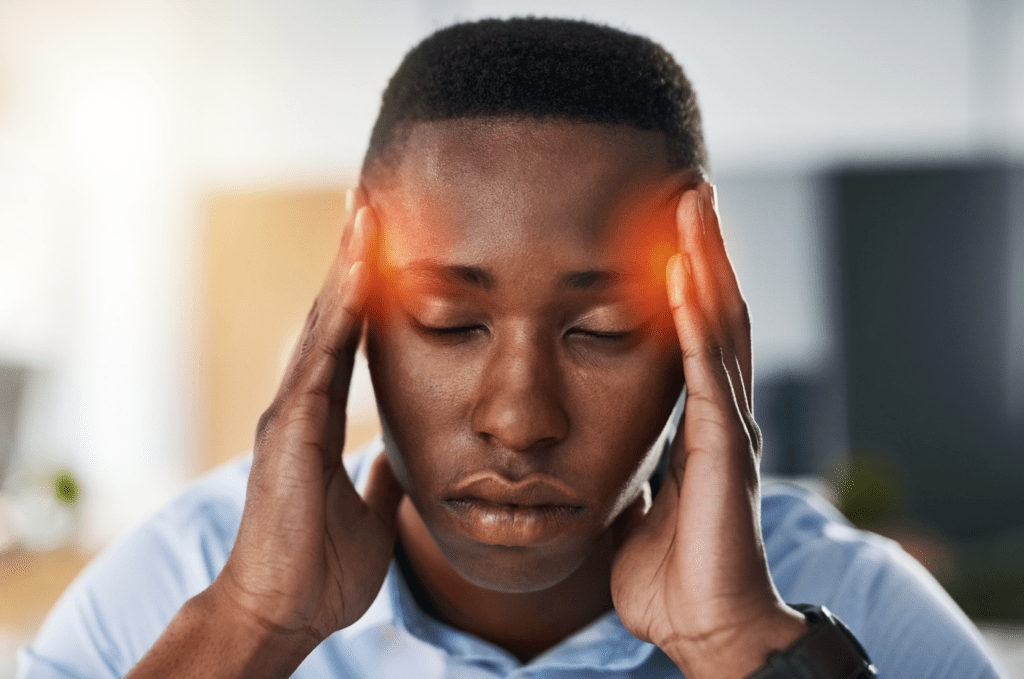
If you suffer from chronic headaches and jaw pain, you’ve likely been told they’re separate problems. Maybe you’ve seen a dentist for a mouthguard and a doctor for migraine medication, with neither addressing the whole picture. At Redbird Wellness in Hopkins, we know that your head and your jaw are in constant conversation, and when that conversation turns painful, you need a connected solution. Let’s break down headaches, TMJ, and the powerful link between them.
Part 1: Headaches (More Than Just a Pain in the Head)
Headaches are one of the most common complaints we see at our Hopkins clinic, and they’re rarely as simple as they seem. While there are many types, the two we encounter most frequently are tension-type headaches and migraines.
Tension-Type Headaches
These are the classic “band around the head” headaches. They often start in the neck and suboccipital region (the base of your skull) and radiate forward. The pain is typically dull, aching, and accompanied by a sense of tightness. These headaches are almost always mechanical in origin. Stiff joints, tight muscles, and poor movement patterns in the neck and upper back.
Migraines
Migraines are more complex and can involve throbbing pain, light sensitivity, nausea, and visual disturbances. While they have neurological and often genetic components, mechanical triggers are incredibly common. A stiff upper neck or tension in the suboccipital muscles can absolutely initiate or worsen a migraine episode. The nervous system becomes sensitized, and the mechanical tension acts as the match that lights the fire.
The Role of Sensitization in Chronic Headaches
When headaches persist for months or years, the nervous system often becomes hypersensitive. This means it begins reacting more strongly to smaller mechanical inputs. A minor jaw clench, a slightly stiff neck joint, or a stressful day can trigger a disproportionate pain response. Understanding this matters because it shifts the focus from “damage” to modulation. TMJ dysfunction and upper cervical stiffness don’t have to be dramatic to provoke headaches; they simply need to repeatedly stimulate a sensitized system. Treatment must calm both tissue tension and nervous system reactivity to create lasting change.
What We Look For: The Mechanical Drivers
When a patient presents with headaches, we don’t just treat the head. Using our motion-based assessment, we systematically evaluate:
- Cervical Mobility: Is the upper neck (C1-C3) stiff? These joints have a direct neurological connection to the head via the trigeminocervical complex.
- Shoulder and Ribcage Mechanics: Can your shoulder blades move freely? Does your ribcage expand with breath? Restrictions here create tension that travels up the chain.
- Upper Extremity Patterns: Believe it or not, tension patterns through the arms and hands can influence the neck and head. Everything is connected.
Screen Use and Headache Frequency
Extended screen time significantly increases headache frequency. When your eyes focus forward for prolonged periods, subtle contraction occurs in the muscles around the temples and forehead. Simultaneously, forward head posture increases demand on the suboccipital muscles. Add low-grade jaw clenching during concentration, and you have a perfect storm. This triad of eye strain, cervical tension, and jaw compression commonly drives chronic headaches in desk-based workers.
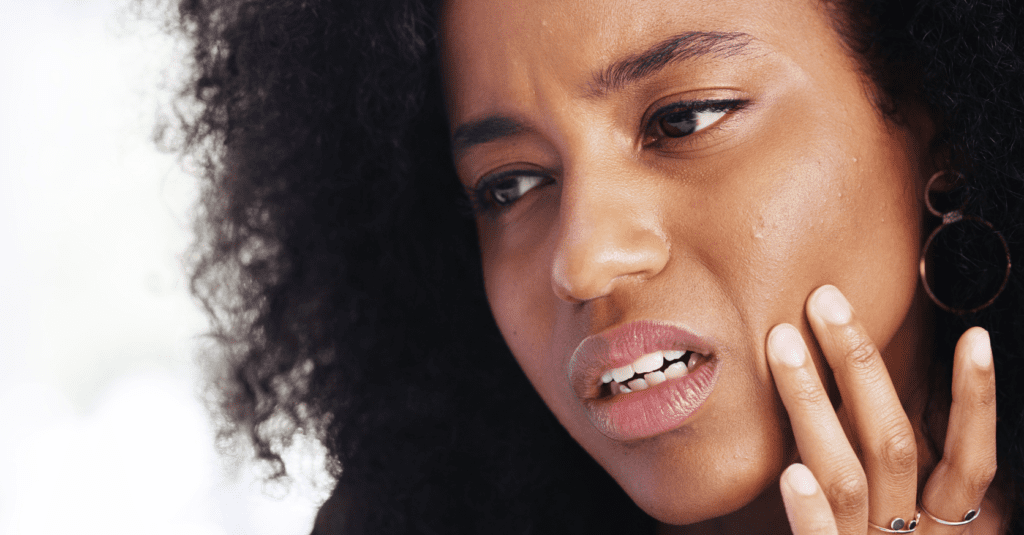
Part 2: TMJ (When Your Jaw Becomes the Problem)
Temporomandibular joint (TMJ) disorders are often misunderstood. Many people think it’s just about the joint itself, the hinge where your jaw connects to your skull. In reality, TMJ issues are primarily muscular problems that secondarily affect the joint.
The muscles of mastication, your masseters, temporalis, pterygoids, and suprahyoids, are powerful. They work constantly throughout the day, not just when you eat. When these muscles become overactive, tense, or develop trigger points, they create a cascade of symptoms:
- Jaw pain and clicking
- Difficulty chewing
- Facial pain
- Earaches or fullness
- Ringing in the ears (tinnitus)
- Limited mouth opening
TMJ and Ear Symptoms
Many patients are surprised to learn that TMJ dysfunction frequently mimics ear pathology. Fullness, pressure, popping, or ringing are often misattributed to sinus or middle ear problems. The temporomandibular joint sits directly in front of the ear canal. When inflamed or compressed, it can refer sensation into the ear. Additionally, the trigeminal nerve shares pathways with auditory structures, explaining why TMJ and headaches often co-occur with tinnitus or sound sensitivity.
The Grinding Connection
Nighttime clenching and grinding (bruxism) is often blamed for TMJ issues, and it can certainly contribute. However, in our experience, daytime clenching from stress and prolonged forward head posture is equally, if not more, significant. When your head sits forward of your shoulders, your jaw automatically retracts, placing strain on the muscles and joints.
Stress Physiology and TMJ
Under stress, your sympathetic nervous system activates. One of its default patterns is increased jaw tension. Many people clench without awareness during concentration, driving, or emotional stress. Over time, this low-level contraction reduces blood flow to the jaw muscles and increases trigger point formation. Chronic sympathetic tone not only worsens TMJ symptoms, it amplifies headache frequency. Addressing stress physiology through breathing and nervous system regulation is therefore a key component of care.
What We Look For: Beyond the Jaw
When assessing TMJ, we look at the entire kinetic chain:
- Cervical Spine: The nerves that supply your jaw muscles originate in the neck. Stiffness here changes how those muscles function.
- Shoulder and Ribcage: Rounded shoulders and a collapsed rib cage pull your head forward, changing jaw position.
- Breathing Patterns: Shallow, chest-based breathing often involves the accessory muscles of the neck and jaw, creating chronic tension.
Tongue Position and TMJ
Tongue posture is an often-overlooked contributor to TMJ and headaches. When resting correctly, the tongue should sit gently on the roof of the mouth, distributing pressure evenly. Many people habitually press their tongue against their teeth or let it rest low in the mouth, altering jaw tension. This small but persistent pattern can reinforce muscular imbalance in the jaw and neck.
Part 3: The Connection (Why Your Head and Jaw Can’t Be Separated)
Here’s where it all ties together. The link between headaches and TMJ is not mystical, it’s anatomical and muscular. The primary connection runs along the muscular chain of the anterior neck and the base of the skull.
The Muscular Highway
Think of the muscles on the front of your neck (the suprahyoids and infrahyoids) as a highway connecting your jaw to your collarbone and ribcage. When your jaw muscles are tense, whether from clenching, grinding, or poor posture, they pull on these anterior neck muscles. This tension travels down to the collarbone and up to the base of the skull (via the suboccipital muscles).
The Resulting Cascade
- Jaw Tension: Trigger points develop in the masseter and temporalis from clenching or prolonged posture.
- Anterior Neck Pull: The tense jaw muscles tug on the muscles attached to your hyoid bone and throat.
- Suboccipital Tension: This pull transmits tension all the way to the base of your skull, where the suboccipital muscles become tight and irritable.
- Headache Activation: Those tight suboccipital muscles refer pain directly into the head, and the stiff upper cervical joints they attach to become hypersensitive.
The Trigeminal Link
The trigeminal nerve supplies sensation to the face and jaw. It converges with upper cervical nerve pathways in a structure called the trigeminocervical complex. This is the neurological crossroads where TMJ dysfunction can amplify headaches. Irritation in the jaw muscles increases input into this shared pathway, lowering the threshold for head pain. That is why jaw tension can trigger migraine-like symptoms even when no primary migraine disorder exists.
The Surprising Finding
In our Hopkins clinic, we often find that the jaw is the primary driver of neck tension, more often than the other way around. This is an important distinction. While treating the neck is essential, if we ignore the jaw, the tension pattern will simply re-establish itself. The jaw keeps pulling, and the neck keeps responding.
The Redbird Approach: Treating the Whole Chain
Our treatment for headaches and TMJ follows a logical hierarchy, always starting with the most effective tool for calming the system.
Phase 1: Dry Needling (The Star of the Show)
Dry needling is hands-down our most effective treatment for this cluster. By targeting trigger points in:
- The Jaw: Masseter and temporalis
- The Anterior Neck: Sternocleidomastoids
- The Posterior Neck: Suboccipitals and Upper Traps
We can rapidly decrease pain, sensitivity, and muscular tension. The twitch response resets overactive motor units, pulling the plug on the pain cycle.
Why Needling the Jaw Changes Headaches
Trigger points in the masseter and temporalis frequently refer pain into the temples, behind the eyes, and into the forehead. By directly addressing these muscular drivers, we often reduce headache frequency within the first few visits. Many patients notice not only less jaw pain, but decreased pressure and fewer headache flare-ups.
Phase 2: Manipulation
Once the muscles have been calmed, we assess and treat joint restrictions.
Upper Cervical Manipulation: Restoring motion to C1-C2 and C2-C3 directly influences the trigeminocervical complex, reducing headache frequency and intensity.
Thoracic Manipulation: Freeing up the mid-back improves shoulder and head posture, taking load off the neck and jaw.
Phase 3: MRT and Cupping
We use Myofascial Release Technique and cupping to address the connective tissue restrictions in the suboccipitals, sternocleidomastoid (SCM), and upper traps. This decompresses and remodels the tissues that have become chronically tight, improving elasticity and reducing tension.
Phase 4: Rehabilitative Exercise
The final, essential piece is teaching you to use your strength more efficiently. Our rehab focuses on:
- Scapular Mobility: Building a stable foundation for your head and jaw.
- Deep Neck Flexor Strength: Retraining the muscles that support your head in neutral.
- Breathing Patterns: Encouraging diaphragmatic, rib-expanding breath to reduce accessory muscle use.
- Movement Variability: Giving you multiple ways to move your neck and jaw, so you’re not stuck in rigid, tension-producing patterns.
Long-Term Control of TMJ and Headaches
Sustainable change requires self-management tools. We teach jaw relaxation drills, tongue posture resets, nasal breathing strategies, and controlled neck mobility exercises. These reinforce in-office treatment and prevent relapse. The goal is independence, not dependence on passive care.
The Biggest Myth: You Just Have to Live With It
If you’ve been told that headaches and jaw pain are just something you have to accept because it’s due to stress, genetics, or “just the way you are”, let us be clear: that is false. There are mechanical drivers that can be identified and treated. You don’t have to manage symptoms indefinitely with mouthguards and medications.
Find Real Relief in Hopkins
If you’re in Hopkins, Minnetonka, St. Louis Park, or the surrounding area and tired of living with headaches and jaw pain, we offer a connected, evidence-based solution. We’ll assess the full chain, identify the drivers, and build a plan that addresses the muscular and joint restrictions keeping you stuck.
Ready to break the headache-TMJ cycle? Schedule your comprehensive evaluation at Redbird Wellness today.