
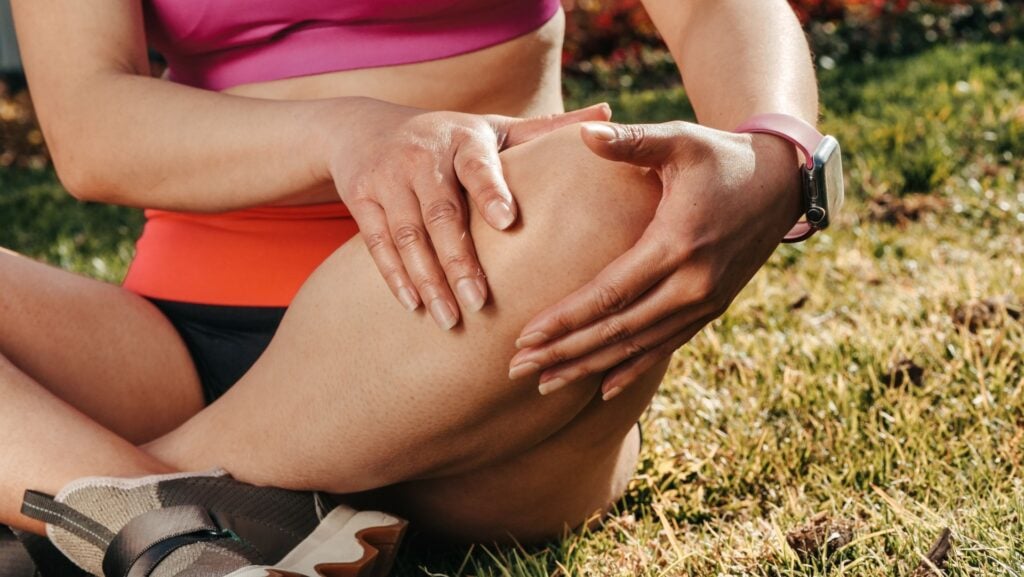
If you get a sharp, localized ache right at the bottom of your kneecap that flares up with jumping, squatting, or landing, and eases off (at least at first) once you’re warmed up, you’re probably dealing with patellar tendinopathy, better known as jumper’s knee. It’s genuinely common in anyone doing repetitive jumping or explosive knee work. Research puts overall prevalence around 14% of athletes generally, climbing to as high as 45% in volleyball players and 32% in basketball players, high enough that it’s practically an occupational hazard of those two sports specifically. This is another condition where the standard advice has evolved a lot, and where a few specific, well-studied details actually change how it should be managed.
This is the long version. The tissue and mechanism behind it, the myths that get in the way of good decisions, and why treatment here combines hands-on work with a specific, progressive loading plan.
The Condition, Deep Dive
Your quadriceps connects to your shin bone through a chain: quad muscle, into the quad tendon, over the kneecap (the patella, which is essentially a bone embedded inside that tendon), and out the other side as the patellar tendon, anchoring into the top of your tibia. That whole chain is called the extensor mechanism, and it’s what straightens your knee and, more importantly for this condition, what absorbs and returns enormous force every time you land from a jump. The patellar tendon specifically has to handle both jobs at once, soaking up load on landing (an eccentric, energy-absorbing demand) and firing it back out the moment you jump again. That repeated demand is also why patellar tendinopathy is commonly referred to as jumper’s knee.
That repeated absorb-and-release cycle, far more than simple wear, is what makes this tendon so specifically vulnerable in jumping sports. It’s also worth understanding why this differs from a muscle strain: tendons are far less elastic and have a much slower turnover rate than muscle tissue, meaning they adapt to new demands more slowly and are less forgiving of a rapid spike in training load than the muscles pulling on them.
The overwhelming majority of cases show up at one very specific spot: the inferior pole of the patella, right where the tendon originates off the bottom of the kneecap. What’s actually happening there is cumulative microtrauma from repetitive loading, small-scale tendon tears and collagen disorganization building up faster than the tendon can remodel and repair. Tissue analysis comparing symptomatic to asymptomatic athletes has found real, measurable differences in collagen organization, and the pattern is degenerative, not primarily inflammatory. Closer to gradual wear-and-rebuild going in the wrong direction than to an angry, swollen, “-itis” type problem.
Why it builds up is rarely one clean answer, and this is a good one to think about in pieces rather than a single cause: a sudden jump in training volume or jump count, hard or unforgiving playing surfaces, not enough recovery between high-load sessions, and interestingly, landing mechanics matter more than people expect. Research on jumping athletes with jumper’s knee has found a real association between reduced ankle dorsiflexion range and the presence of this condition, which tracks with a pattern you’ve probably noticed by now if you’ve read through this series: a stiffer joint somewhere in the chain tends to push extra load onto whatever’s next in line, and here that’s often the knee extensor mechanism absorbing force the ankle didn’t. Add in quad and hip strength deficits, and usually it’s a handful of these stacking together past what the tendon had adapted to handle, not one single trigger.
Mythbusting Jumper’s Knee
Myth #1: There’s one correct exercise, and the decline squat protocol is the only real answer.
The eccentric decline squat, slow, controlled lowering on a 25-degree decline board, historically done twice daily became the benchmark treatment for jumper’s knee for good reason: it’s genuinely well-studied and effective. But a well-known trial comparing that protocol directly against heavy slow resistance training (slower-tempo, higher-load leg presses and knee extensions) found something worth knowing: both approaches produced similar improvements in pain and disability after 12 weeks.
But only the heavy slow resistance group showed actual measurable improvement in tendon pathology and increased collagen turnover. And patient satisfaction at six months was 70% in that group compared to just 22% in the eccentric-only group. That’s not a small gap. The exact protocol matters less than people assume, and if you’ve struggled to stick with twice-daily decline squats, a heavier, less frequent strength-based approach may genuinely serve you better, not worse.
Myth #2: You have to stop all jumping and training completely until it’s fully pain-free.
For competitive or in-season athletes especially, this advice is often both impractical and unnecessary. Complete rest doesn’t rebuild a tendon’s capacity. It just removes the stimulus that would rebuild it, while conditioning and sport-specific capability quietly decline in the meantime. Modern management leans instead toward monitored, modified loading: tracking how the tendon responds to activity using pain as a guide rather than requiring zero pain before doing anything.
One practical tool used clinically is a simple daily check (a single-leg decline squat, scored for pain) used as a quick, consistent gauge of whether the tendon is coping with the current training load or needs a temporary dial-back. That’s a very different, far more usable approach than “wait until it doesn’t hurt at all,” and it gives an athlete and their team an actual data point to make decisions with day to day. There are documented cases of competitive in-season athletes managing this condition successfully with a structured, monitored program rather than stepping away from their sport entirely, which matters if you’re someone who genuinely can’t just take three months off mid-season.
Myth #3: A scan showing tendon damage is what explains your pain, or if the scan is clean, it’s not really tendinopathy.
The picture here is actually more nuanced than the usual “imaging doesn’t matter” story. Unlike some other tendon and joint conditions, patellar tendon imaging genuinely does show meaningful differences between painful and pain-free tendons. Thickening, altered tendon width, and increased blood vessel growth within the tendon are all measurably more common in symptomatic cases, and some studies have found ultrasound changes in asymptomatic athletes actually predict who goes on to develop pain later. So the structural changes are real and not meaningless.
But, and this is the important caveat, plenty of athletes, including elite ones, show these same structural changes on imaging while feeling completely fine, with no pain and no functional limitation at all. That’s why diagnosis here is still made primarily through history and physical exam, not a scan on its own. A picture of your tendon is a piece of the puzzle and can be genuinely useful, but it isn’t a stand-alone verdict in either direction.
Manual Therapy: Why and How It Helps
Consistent with everything else in this series: manual therapy here works best paired with a real loading program, not as a substitute for one. When treating jumper’s knee, that combination becomes especially important.
A review looking specifically at manual techniques combined with a structured decline squat exercise program found that combination genuinely effective, better than expecting hands-on work to carry the whole plan by itself. That combination approach matters more here than it might for some other conditions, given how mechanically demanding this tendon’s job actually is; hands-on work can improve how the surrounding tissue feels and moves, but it isn’t going to build the specific loading capacity a jumping athlete needs to actually return to sport.
Scraping (IASTM): Applied to the quad and the tissue surrounding the patellar tendon, this supports local tissue mobility and blood flow and pairs well with the loading program doing the heavier lifting underneath it.
Dry needling: Current evidence doesn’t clearly support needling directly into the pathological portion of the tendon itself. Where needling earns its place is in the surrounding quad musculature, addressing tightness and trigger points that add extra tension and load onto the tendon with every contraction. Same principle we’ve seen elsewhere in this series: treating what’s feeding the problem, not just the exact spot that hurts.
Cupping: Used on the quad, this works through the same local blood flow and tissue tone mechanisms as elsewhere in this series. A reasonable supporting tool as part of a broader plan, not a standalone fix.
E-stim: Mostly useful for taking the edge off pain and supporting quad activation, particularly when pain has led to some inhibition or avoidance of normal quad engagement. It’s making the rest of the plan more tolerable to execute consistently, which matters given how much this condition depends on sticking with a program over weeks.
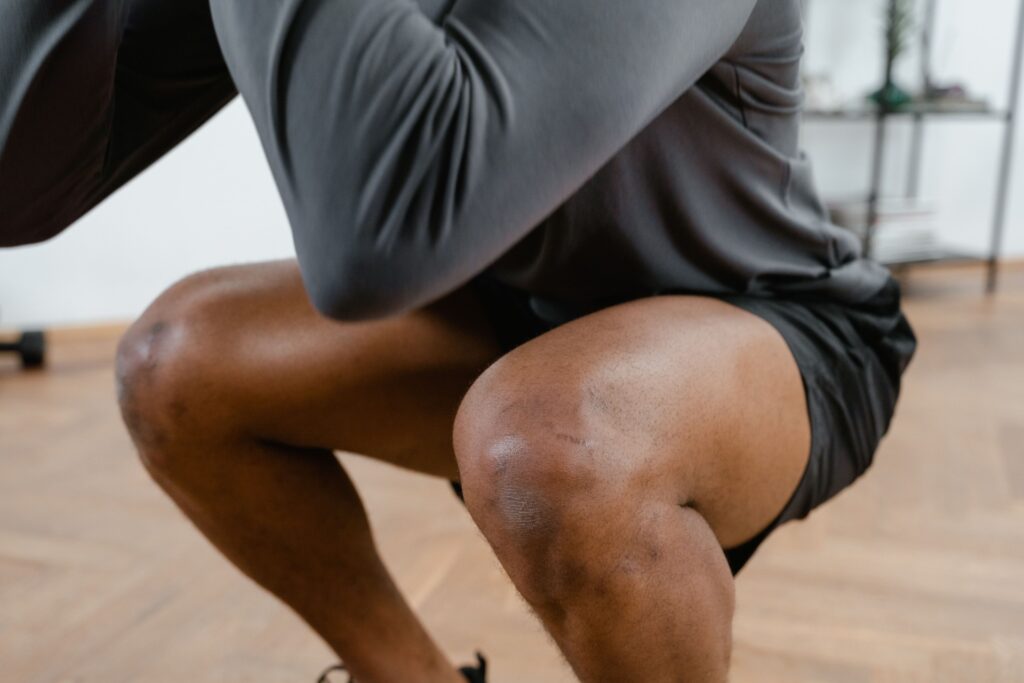
Rehab: What Adaptations We’re Looking For, and Why They Matter
The target here is rebuilding the tendon’s actual capacity to absorb and return load with measurable improvements in collagen organization and the tendon’s ability to tolerate the specific demands of jumping and landing, not just quieter pain on a given day.
Progressive loading, heavy and controlled. Whether that’s the classic decline squat protocol or a heavy slow resistance approach, the tendon needs consistent, progressively increasing load over a meaningful stretch of time. Typically weeks, not days to actually remodel. Given the satisfaction and tissue-level findings above, heavy slow resistance is often the more practical starting point for a lot of people, with decline squats layered in as appropriate. Isometric holds also have a real, specific role early on for tendons that are especially irritable, since they tend to be well tolerated even when dynamic movement still provokes pain, giving the tendon a loading stimulus without asking it to handle a full range of motion right away.
Quad and hip strength, addressing the whole chain. Since landing mechanics and force distribution up the leg play a real role in how much load lands on this specific tendon, strengthening isn’t just about the quad in isolation. Hip strength and overall lower limb control factor into how well the whole system shares the load.
Blood flow restriction training is one of the best-fitting tools in this entire series for exactly this condition. There’s a documented case of in-season collegiate decathletes managing patellar tendinopathy through a BFR-based program specifically because they needed real strength and tendon loading without the full mechanical stress of heavy training during competition season. The mechanism is well understood, having meaningful strength and even tendon adaptation at much lower absolute loads than traditional heavy training requires. Which makes it a genuinely good option any time the tendon can’t yet tolerate full loading, or when someone needs to keep training through a season rather than shutting things down entirely.
Eventually, a return to the actual demand. Since this tendon’s job is absorbing and returning force during jumping specifically, rehab that stops at slow, controlled strengthening and never progresses toward real jumping and landing work leaves a gap. The tendon needs to be reintroduced to the fast, elastic loading it’ll actually face in sport before someone’s considered fully ready to return.
Worth knowing, and consistent with almost everything else covered in this series: surgery exists for this condition, but it’s reserved for cases that genuinely don’t respond to a properly run conservative program over a meaningful stretch of time, not an early option. The large majority of people never need to go there, which is exactly why so much of this article is about doing the conservative version well, with real loading and real time, rather than rushing past it toward something more drastic.
Why this all matters comes back to the same idea running through this whole series: jumper’s knee isn’t caused by one clean thing, and it isn’t fixed by one clean thing either. It’s tendon capacity, quad and hip strength, landing mechanics, and how much load and recovery time you’re actually getting, all moving together, which is exactly why a plan built around one exercise, or around waiting it out, so often falls short of one built around the whole picture.
Ready to Get Your Knee Moving Better?
Patellar tendinopathy doesn’t usually need more rest and crossed fingers. It needs a plan that considers tendon capacity, strength, movement, and the demands you’re trying to get back to. At Redbird Wellness, we combine hands-on care with progressive rehab to help you build back the capacity your knee actually needs.
Schedule a consultation at Redbird Wellness in Hopkins, MN, and let’s figure out what’s keeping your knee pain hanging around.
